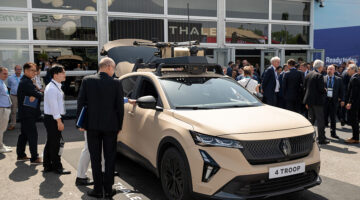
Carmaker Renault teams with Thales on ‘4Troop’ military vehicle design
“France fears we might see high intensity combat on its territory and to prepare for this possibility we need to be ready,” Thales' Marc Dehondt said.
“France fears we might see high intensity combat on its territory and to prepare for this possibility we need to be ready,” Thales' Marc Dehondt said.

France has allocated approximately €600 million ($692 million) to replace its legacy LRU launchers.

Artificial intelligence is reshaping adversarial cyber operations at machine speed, requiring defenders to increase operational tempo while imposing pain and cost.
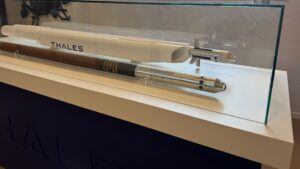
"We more than doubled the [production] number, considering the situation at the moment in the Middle East,” a company executive told Breaking Defense.
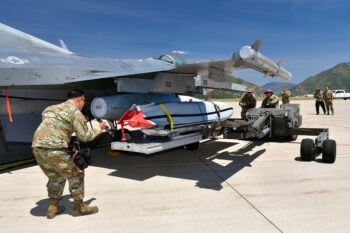
The move to open talks comes after The Hague and Washington signed a 2024 Letter of Offer and Acceptance to initially acquire the deep strike capability.

Britain's BAE Systems, as well as the British arms of US-based Anduril, Portugal’s Tekever and French manufacturer Thales, have been chosen for the concept demonstrator effort, dubbed Project NYX.

By deciding against a request to secure funding for all 36 jets and move ahead with a reduced buy, the Swiss Federal Council accepted that “negative consequences” are to come.

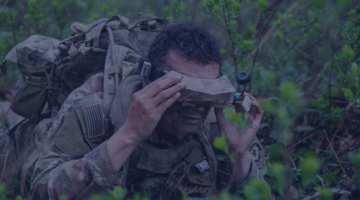
AI is expanding the mission data footprint across defense environments, increasing the need for scalable, layered data-at-rest (DAR) protection.


Breaking Defense visits production lines for made-in-America circuit boards, displays, and missile components.
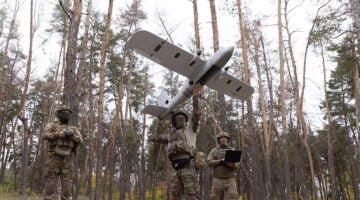
Transatlantic political turbulence could disrupt orders from European customers for US defense equipment over the long term, but if the last year is anything to go by, business is likely to be relatively predictable.
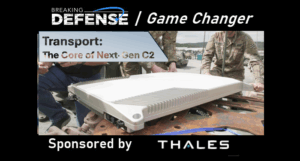
Hybrid communications requirements will shape the Army’s data infrastructure of the future.
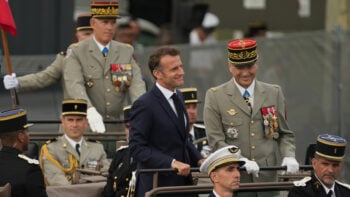
Increased focus on defense is one of five pillars in a new French national space strategy announced by President Emmanuel Macron today.

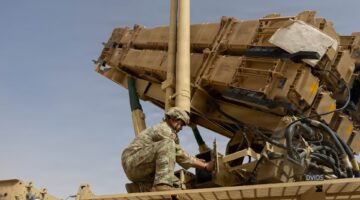
New entrants are filling unmet needs in air-and-missile defense.

BAE Systems, Raytheon Australia, General Dynamics Mission Systems and Thales said they would work collaboratively to design a tri-national command system as a "shared solution for Australia and the UK which builds on General Dynamics' existing AN/BYG-1 system" used by the US.

"Project Bromo is a sovereignty play," Caleb Henry, research director at Quilty Space, told Breaking Defense.

Stakes in the joint entity, planned to be operational from 2027 once regulatory approval is secured, are split with Airbus retaining a majority of 35 percent, while Leonardo and Thales will each be allocated 32.5 percent stakes.
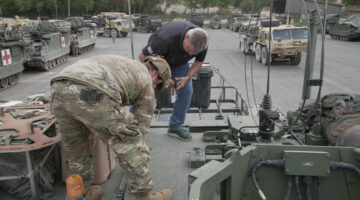
The network transport architecture for NGC2 could be a hybrid approach that combines high assurance communications with 5G, WiFi, and multi-orbit satellites.